Saturday, April 25th, 2026
Doors open at 5:30pm

Official flyer and program available!

Download the printable flyer and program now and share and distribute it to family, friends, neighbors, and colleagues. We encourage widespread distribution—please pass it along as much as possible!

Program last updated 4/21
Astronomy Day 2026

Astronomy Day 2026 Program

Presentations 6:00 – 9:00 PM | Building Z

6:00 PM Presentations

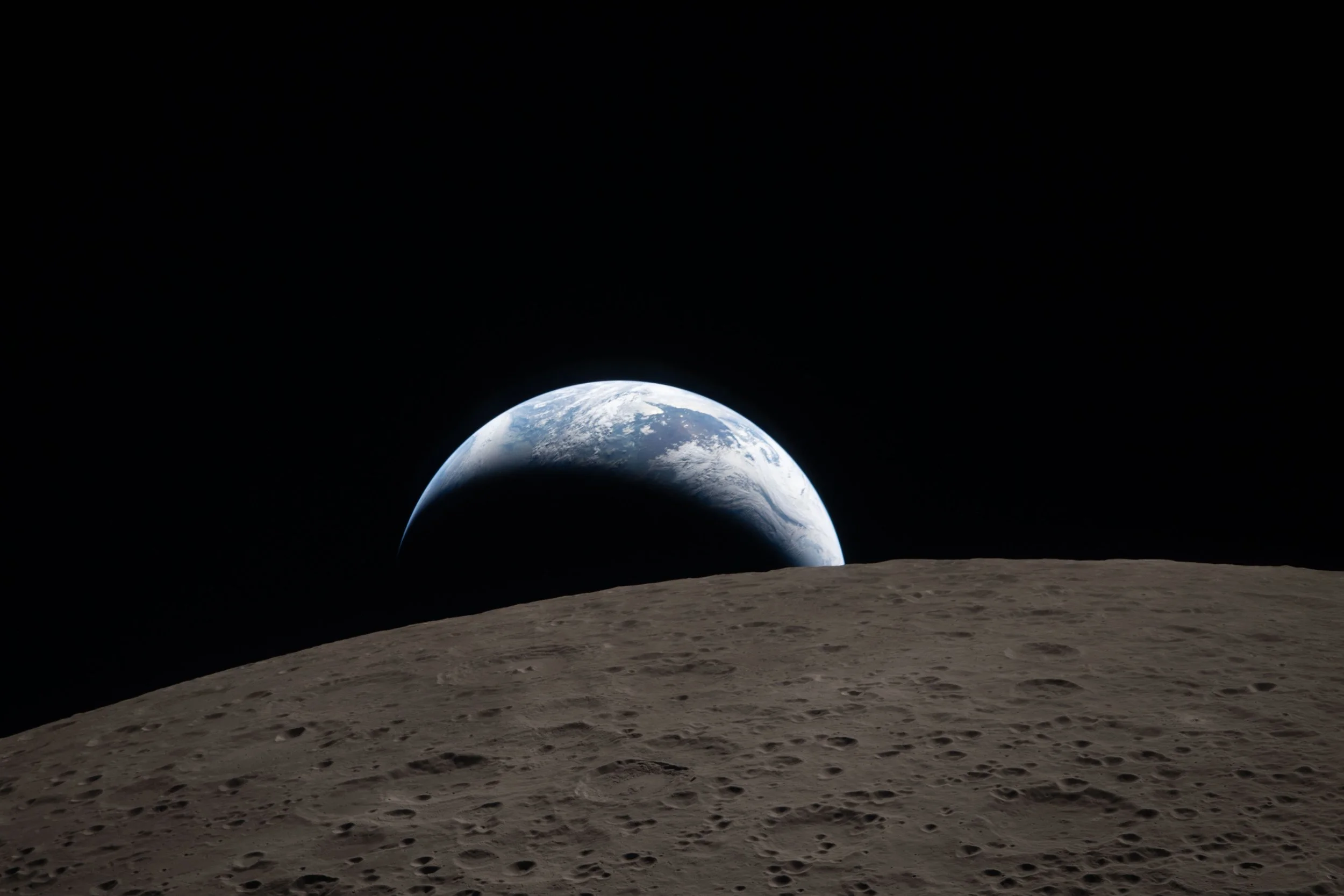
CLPS and Artemis (Room Z102)

Kevin Cole, Associate Professor, Harper College
A look at NASA’s Commercial Lunar Payload Services (CLPS) Program and how it will enhance and build upon Artemis and the exploration of the Moon

Binary Stars (Room Z117)

Pierson Lipschultz, Northwestern University, CIERA
Come learn about the fascinating world of binary stars, from their formation and evolution to their role in helping our understanding of physics. Discover how high-performance supercomputing drives modern astronomy research and why Tatooine sunrises are far more common than you might imagine.

Whats in an Astrophoto? (Room Z119)

Naomi Riley, Harper College
A generalized discussion of the physics of an Astrophoto, what we're looking at, and how the decisions that are made in the image processing, influence what we see and how we pay attention to it.

Space Mining (Room Z123)

Jackie Cooney, Instructor, Harper College
An introduction to the future potential of space mining Near-Earth Asteroids and the Moon

7:00 PM Presentations

The Red Planet Mars (Room Z102)

Robert Karas, Northwest Suburban Astronomers
Mars is the fourth planet from the Sun, famous for its rust-red surface, massive volcanoes, and ancient riverbeds that hint at a watery past. It remains humanity's most promising destination for future exploration — and the search for extraterrestrial life.

Top 10 Astronomy Images of 2025 (Room Z117)

Dale Dellutri, Skokie Valley Astronomers
Everyone loves a Top Ten list! Ten fascinating images from NASA's Astronomy Picture of the Day (APOD.NASA.gov) for the year 2025, along with their explanations. Come, listen, and see how astronomy images can educate, fascinate, and provide a truly artistic experience!

Aurora Borealis: Nature’s Fireworks (Room Z119)

Tom Auchter, Northwest Suburban Astronomers
Learn about the Northern Lights, why there are different colors, what causes aurora, the Sun connection, and when to see them.

8:00 PM Presentations

Wonders of Webb – Part 2 (Room Z102)

Jim Kovac, NASA/JPL Solar System Ambassador
Join the continuing exploration of the cosmos with the James Webb Space Telescope. Discussing the progress to investigate the evolution of galaxies and considering some discoveries awaiting explanation as JWST probes the early Universe.

Stories of Space (Room Z117)

Beth Mund, Casual Space Podcast
STORIES of Space founder Beth Mund shares how a single idea, sending stories beyond Earth, rapidly evolved into a multi- mission exploration spanning sky, sea, Earth orbit, and soon, the Moon. Explore the who, what, where and how the stories we share will change the way we explore space.

Cyclic Universe (Room Z119)

Jeff Schmidt, Adjunct Professor, Harper College
Could the past 14 billion years be just a part of a larger cycle? Albert Einstein, Roger Penrose and many others have proposed a cyclic Universe, but did not have a mechanism. Recent data from the most distant and oldest objects we can image shows a Universe that is highly structured from the "beginning" indicating a framework from past eras. Using standard Physics and re-examining a few assumptions, a cyclic Universe can be shown to be possible and the most likely choice

Extra Activities

Inflatable Planetarium (Room Z130)

Bhasker Moorthy, Harper College
Immersive planetarium experience with full-dome sky simulations and astronomy visuals.

Craft Projects for Children (Room Z128)

Karen Thompson, Northwest Suburban Astronomers
Drop-in astronomy-themed crafts for kids, running in rotating 30-minute sessions throughout the evening.

Henize Observatory

Open 8:00–9:30 PM
Public telescope viewing of the night sky (weather permitting), featuring seasonal celestial objects.
Arrival Instructions

Arrival Instructions

Main Presentations

Parking & Entrance

Building Z Access
Doors open at 5:30 PM

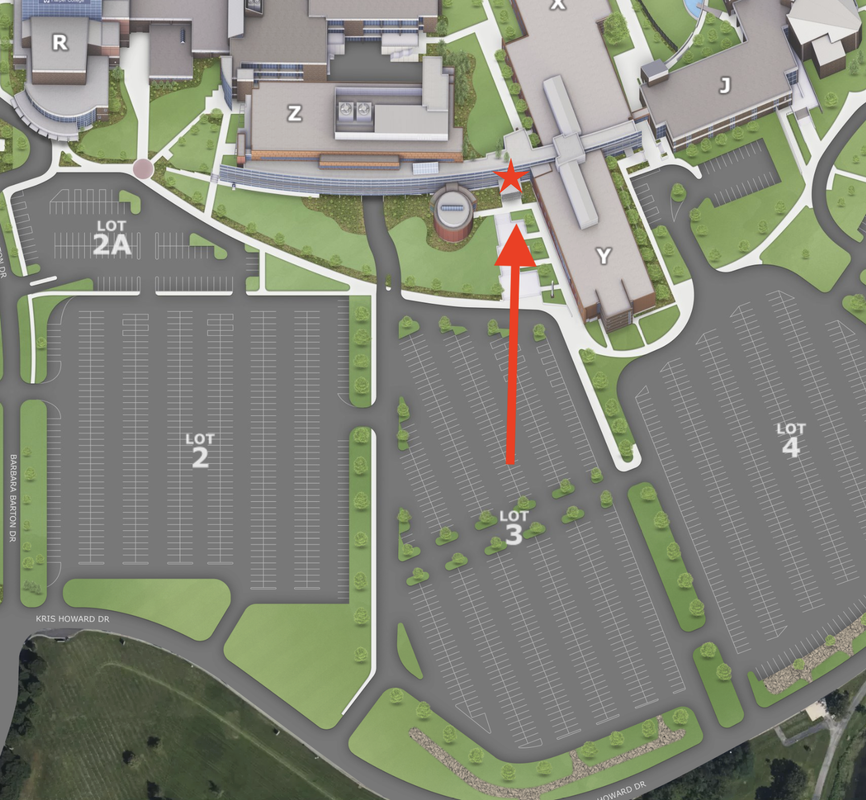
Please park in Lot 3.

Enter through Building Z at the red star location.

If Lot 3 is full, overflow parking is available in Lots 2 and 4.

Navigate to Building Z
Observing Location

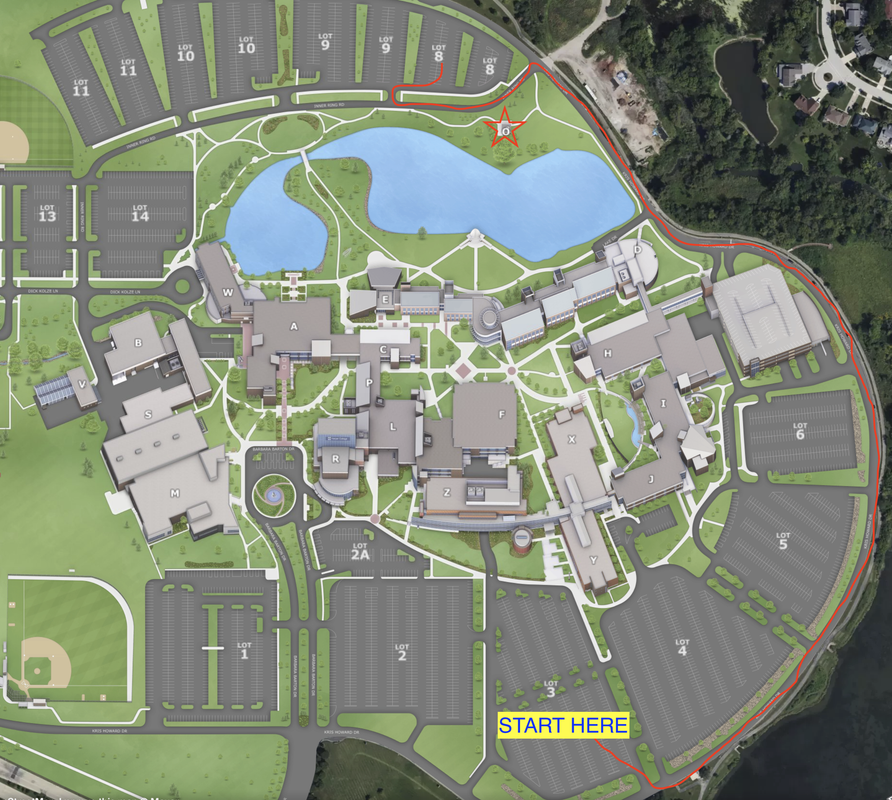
Henize Observatory Access

8:00 PM – 9:30 PM
Weather permitting

(Observing hours depend on weather and attendance.)

From Lot 3, follow the marked path and park in Lot 8.

The Henize Observatory is across the road from Lot 8.

Navigate to Observatory
This is Astronomy Day

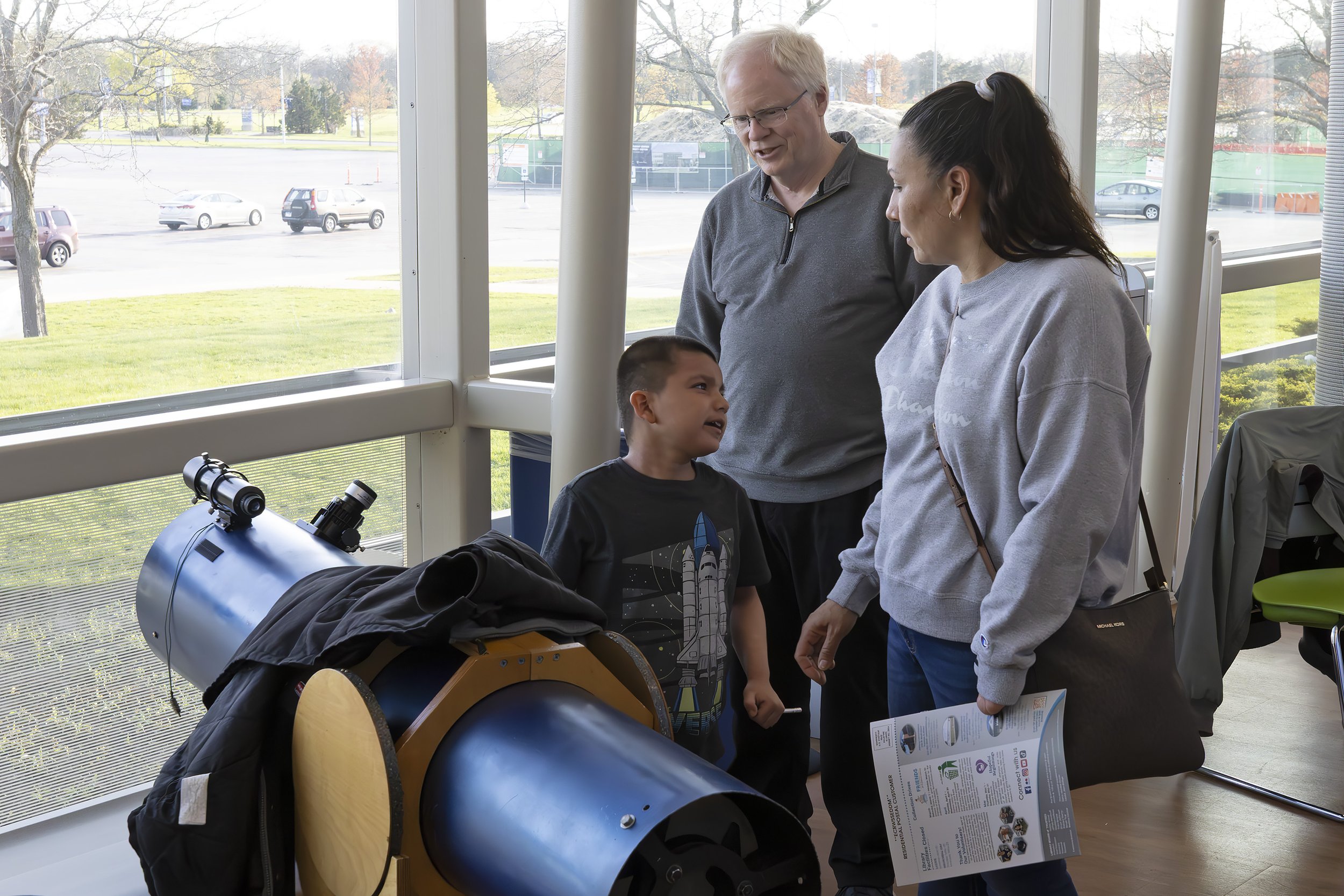
An evening for the community to come together, connect with like-minded peers, and learn something new about astronomy. Presentations on a wide variety of topics will be available for attendees, allowing participants to dive deep into fascinating subjects. Explore several informative booths that will showcase different astronomy topics, enhancing your understanding and appreciation of the universe and how it's captured and studied.

Booths

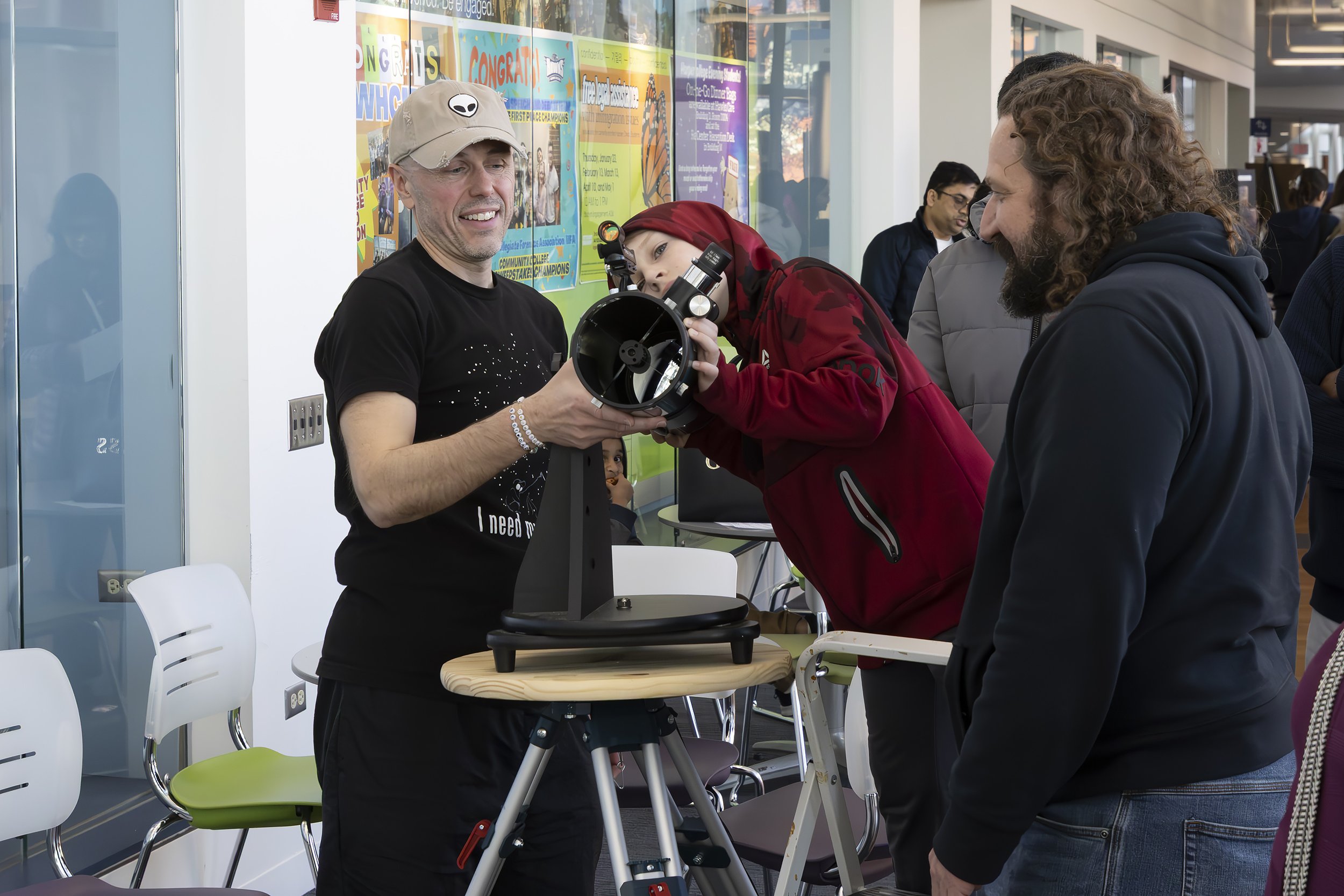
Astronomy booths on different topics, showing off telescope systems allowing you to see and talk with local astronomers about them.

Presentations & Kids activities

Presentations will cover a range of fascinating subjects. Kids activities will also be available.
Observing

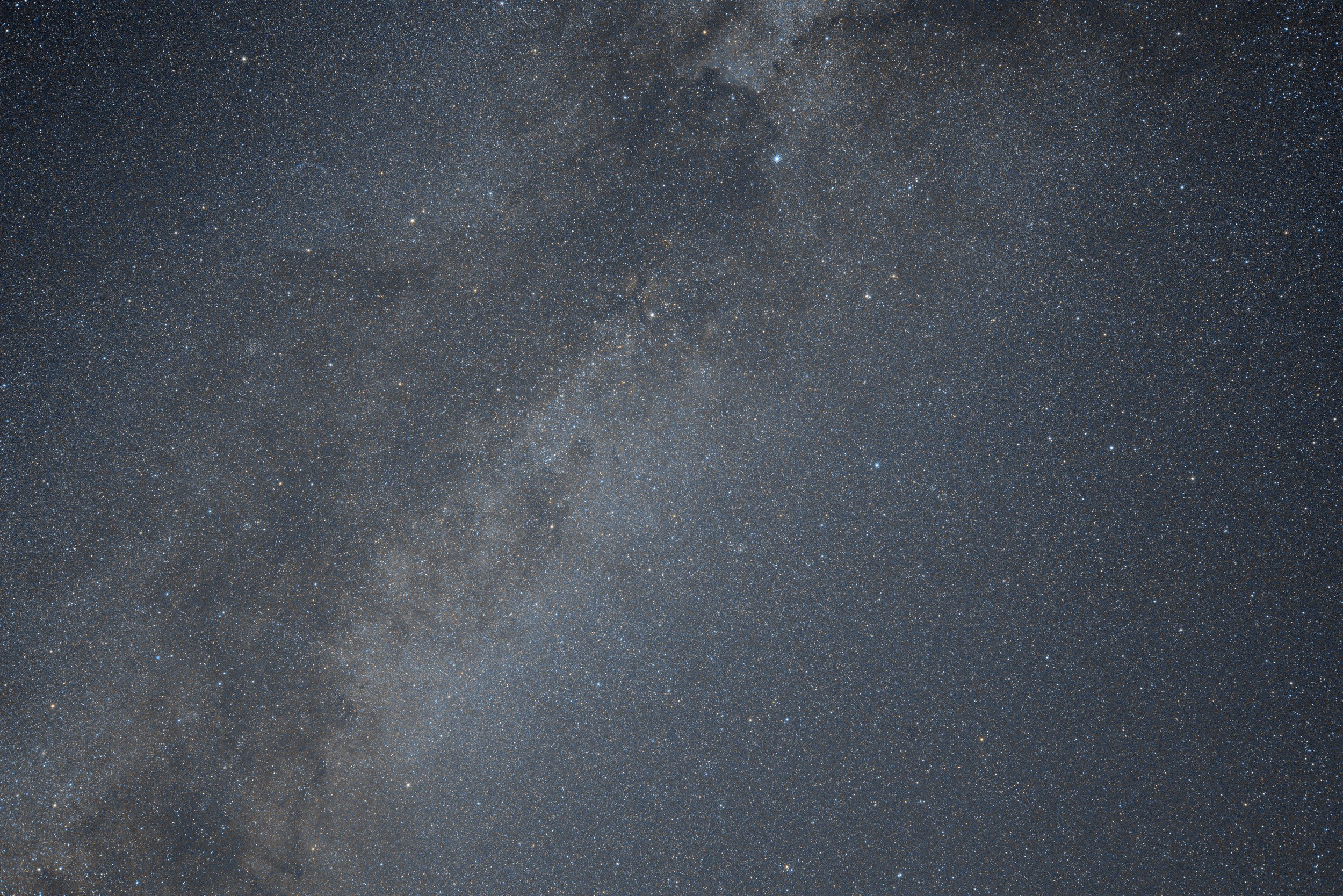
Weather permitting, observing of the night sky will be available. You will be able to use live telescopes to see planets, stars, and more.

We hope you can join us for an evening of talks, demos, and discoveries. Whether you’re new to astronomy or a lifelong enthusiast, we hope you end the night with something new to think about.

See you soon!